
Nolan's six essential films, revisited as 'The Odyssey' finally reaches theaters
'The Odyssey' is finally in theaters, which makes this a reasonable moment to look back at what Christopher Nolan has actually built over three decades. Forty-nine Academy Award nominations. Eighteen trophies across various ceremonies. And, for most of that run, a very specific kind of recognition: visual effects, production design, sound, editing. The craft categories. The ones the industry hands out when it admires how something was made without quite deciding it is important.
| Item | Detail |
|---|---|
| Director | Christopher Nolan |
| Academy nominations | 49 across roughly 30 years |
| Awards won | 18 trophies at various ceremonies |
| Breakthrough night | March 2024, 'Oppenheimer' won 7 of its 13 nominations |
| Newest film | 'The Odyssey' (2026), Matt Damon as Odysseus |
| Format | First commercial feature shot entirely on IMAX film cameras, roughly 600 km of stock |
March 2024 changed the arithmetic. 'Oppenheimer' converted 13 nominations into 7 wins, and this time they were the ones that count in the room: Best Picture, Director, Cillian Murphy for Actor, Robert Downey Jr. for Supporting Actor, Hoyte van Hoytema for Cinematography, Jennifer Lame for Editing, Ludwig Goransson for Score.
Nolan has said 'The Odyssey' came out of that film. Where 'Oppenheimer' watched one man face the reality of what he had made, 'The Odyssey' is about what war does to the people who survive it. Same wound, different end of the telescope.
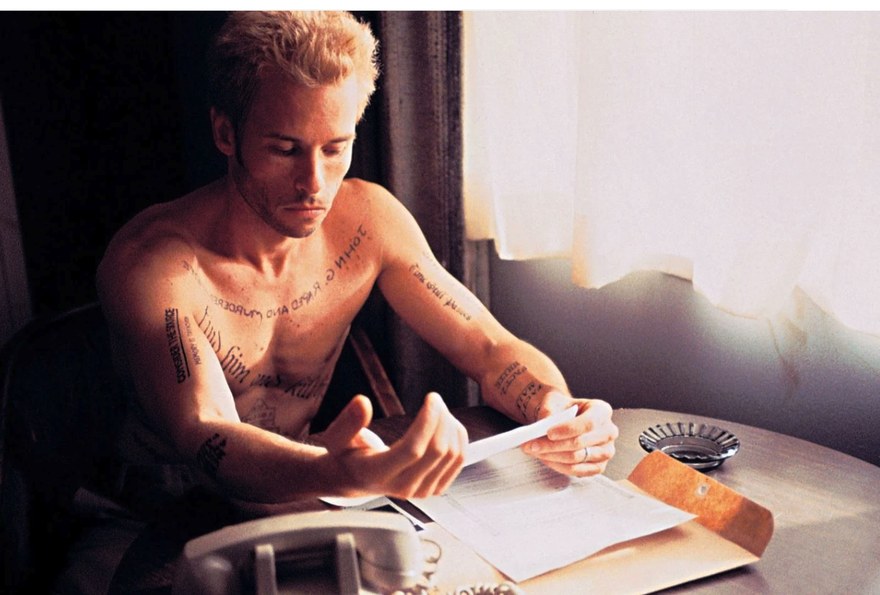
1. Memento (2000)
His first feature was actually 'Following' in 1998, a small film about a man whose hobby is trailing strangers through London. It made eight times its budget in North America and got the reviews, but it did not make him. Two years later 'Memento' did.
Black and white alternating with color. A timeline that runs at you from both directions. A man with no ability to form new memories hunting his wife's killer, leaving himself Polaroids and tattoos and then having to decode his own handwriting. The style was already finished here, fully formed, on a first real budget. Steven Spielberg has called it his favorite Nolan film.
2. Inception (2010)
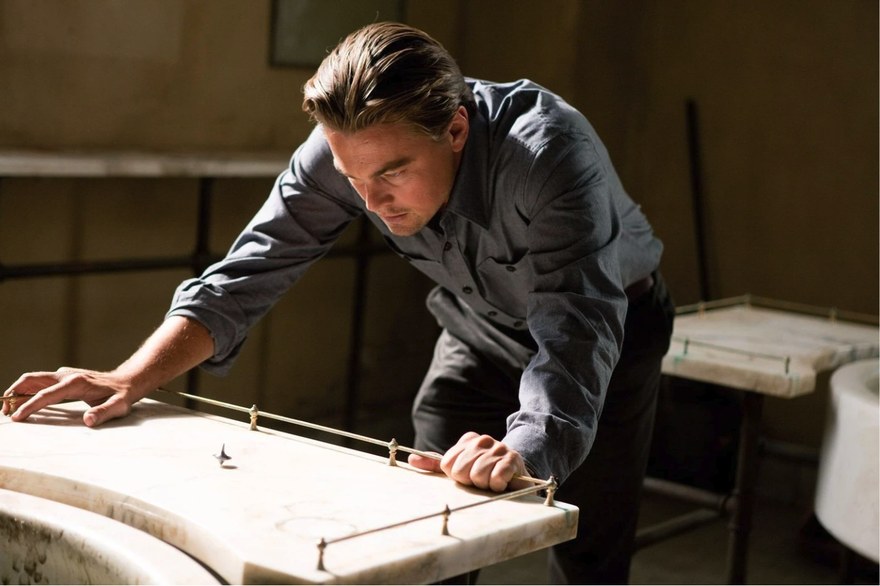
Break into a person's dreams and steal what they know. That is the pitch, and it works as a heist thriller, but the thing that made it stick was smaller and more common than the premise suggests: everybody has woken up unsure of where they just were.
The dream worlds are mostly not CG. Nolan built what he could and shot it, and that stubbornness became the signature more than any single image did. The ending is still argued about more than most endings in film history, which was clearly the point.
3. Interstellar (2014)
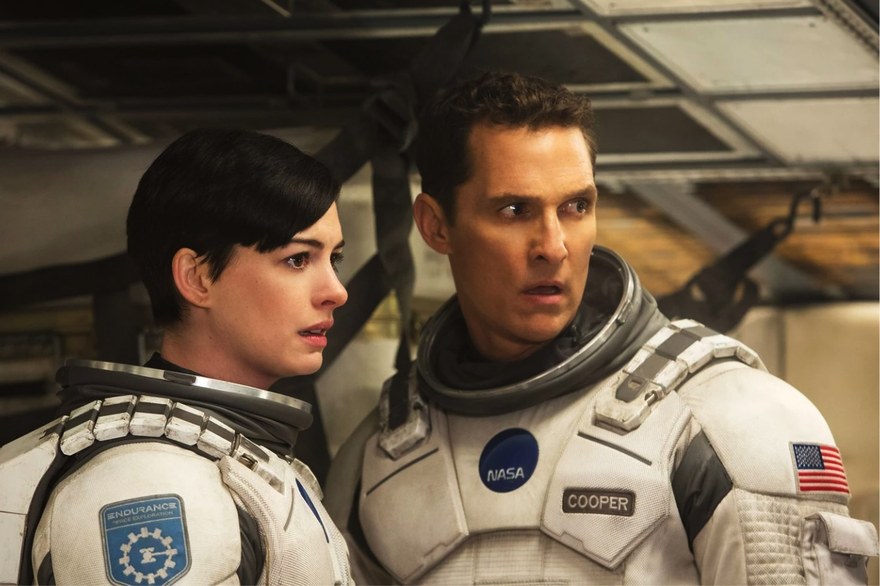
Earth is running out of what keeps people alive. NASA sends astronauts through a wormhole to look for somewhere else, and the physics of the trip means the ones who leave and the ones who stay stop sharing a clock.
Relativity sits underneath the whole film, but the film itself is a family drama, and that combination is why it landed the way it did in Korea. More than ten million admissions. This is the film where Korean audiences stopped being a market and became part of the story around Nolan. He put it plainly: Korean audiences are smart, and they are not afraid of science.
4. Dunkirk (2017)
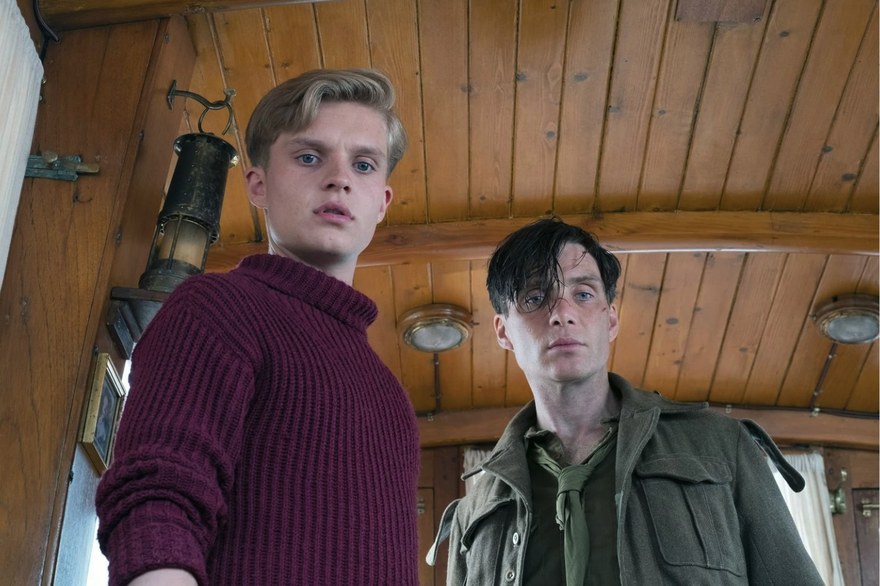
Operation Dynamo, May 1940. Nolan runs three clocks at once and cuts between them: a week on the beach, a day at sea, an hour in the air. They do not line up until they do.
It took three Oscars at the 2018 ceremony and stood as the most commercially successful film about the Second World War anywhere in the world. Until Nolan himself took that back with 'Oppenheimer'.
5. Oppenheimer (2023)
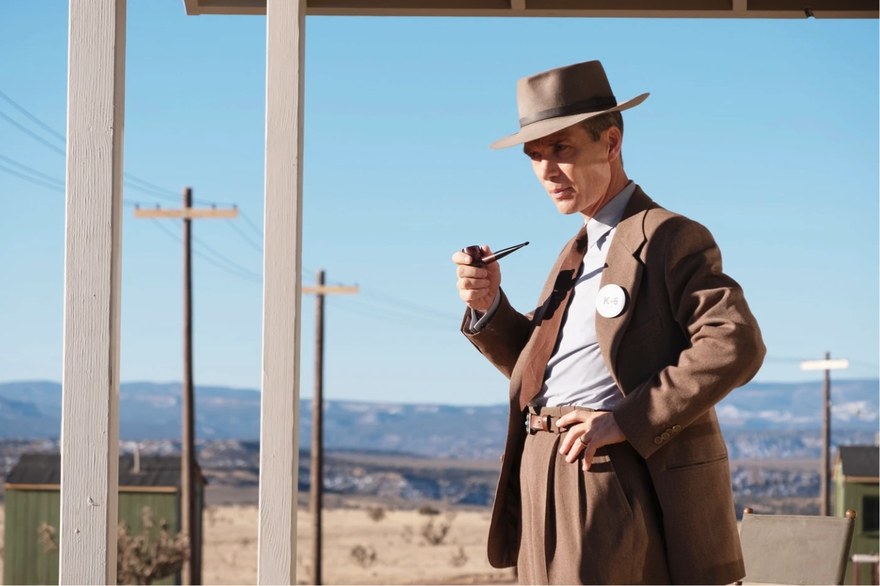
J. Robert Oppenheimer joins the Manhattan Project. Nolan stages humanity's first nuclear test without computer effects, which is either an obsession or an argument, depending on how generous you feel. Cillian Murphy plays a man who has been handed the ability to save or end the species and has to keep going to meetings about it.
Roughly a billion dollars worldwide, for a three-hour talky biopic about physics and committee hearings. That number is the reason the next paragraph exists at all.
6. The Odyssey (2026)
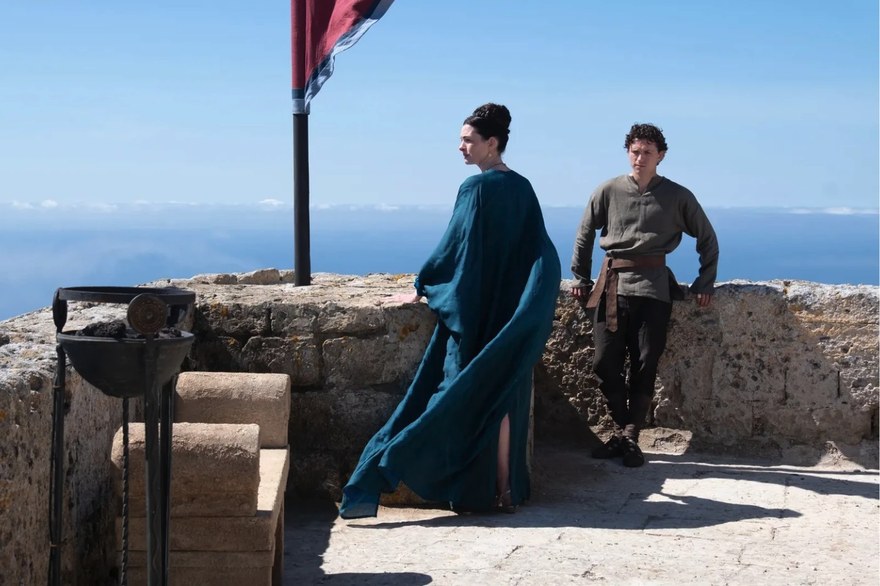
Homer's poem is three thousand years old. Odysseus leaves Troy and spends ten years trying to get back to Ithaca, to Penelope, to a son who grew up without him.
Matt Damon plays him as a wounded man overwhelmed by his own capability, which puts him in a line that runs from Bruce Wayne in 'The Dark Knight' through to Oppenheimer. Nolan keeps making films about people who are extremely good at something that is destroying them. This one is the first commercial feature shot entirely on IMAX film cameras, using something like 600 kilometers of stock.
The read: the trophies were never the bet, the format was
Start with the split in the record. Forty-nine Academy nominations over three decades, and until 2024 the wins clustered in the technical categories. That is not a slight. It is a description of how the industry files a director who is trusted with money and machinery before he is trusted with meaning. 'Oppenheimer' broke the pattern by taking 7 of 13, including the two that decide how a career gets written up.
Here is why that matters commercially rather than sentimentally. Best Picture and Director are what let a filmmaker set the terms of the next production instead of negotiating them. Nolan spent the credit immediately, and he spent it on format rather than on scale or on stars. Shooting an entire commercial feature on IMAX film cameras is a decision that constrains everything downstream: the cameras are loud and heavy, the magazines run short, the stock is expensive, and the number of people alive who can service the equipment is small.
Where this breaks with current industry practice is almost the whole point. The rest of the business is moving toward virtual production, LED volumes, and capture formats chosen for what postproduction can do with them later. Nolan went the other way and picked the format with the fewest available screens and the least flexibility, on the theory that a film people have to travel to see is worth more than a film that is simply available. That is a distribution argument dressed as an aesthetic one.
The risk is the projection bottleneck. There are only so many venues on earth that can run a 70mm IMAX print, they are booked in weeks not months, and a film shot for a format most of its audience will watch in a different format is spending its budget on an experience it cannot deliver at scale. 'Oppenheimer' survived that because the story worked on a laptop too. A three-thousand-year-old sea epic built around what the frame can hold has less margin.
Open question
When the release numbers come in, does the count of true IMAX film screens running 'The Odyssey' exceed the count 'Oppenheimer' got in 2023? If it does, the format bet paid and the argument about screens was right. If it does not, then "shot entirely on IMAX film" is a production fact that most of the paying audience will never actually see, and it belongs in the trivia column rather than the business case.
NEXT — Watch the second-weekend hold rather than the opening number. A film selling a specific room rather than a specific story drops differently, and that curve will say more about the bet than any first-weekend total.
Leave your opinion in the replies.
Source: VOGUE Korea (2026-08-05), 강병진, Marthe Mabille. Images: Everett Collection, Universal Pictures, (c)Melinda Sue Gordon / Universal Pictures. Originally from WWW.VOGUE.FR
Comments 0