
BTS Bought Tabloid Ads About a Bathroom. Then 'NORMAL' Broke a Spotify Record

Photo: BIGHIT MUSIC
Readers who opened the New York Post on Tuesday, July 14 found a tabloid splash sitting where an ad usually goes. "BTS MEMBERS SEEN IN BATHROOM AMID MYSTERIOUS LATE-NIGHT GATHERING," it read, under a red starburst promising a shocking photo. The San Francisco Chronicle ran the same page. One line of grey type along the top was the only thing separating it from the reporting around it: PAID ADVERTISEMENT. BIGHIT MUSIC.
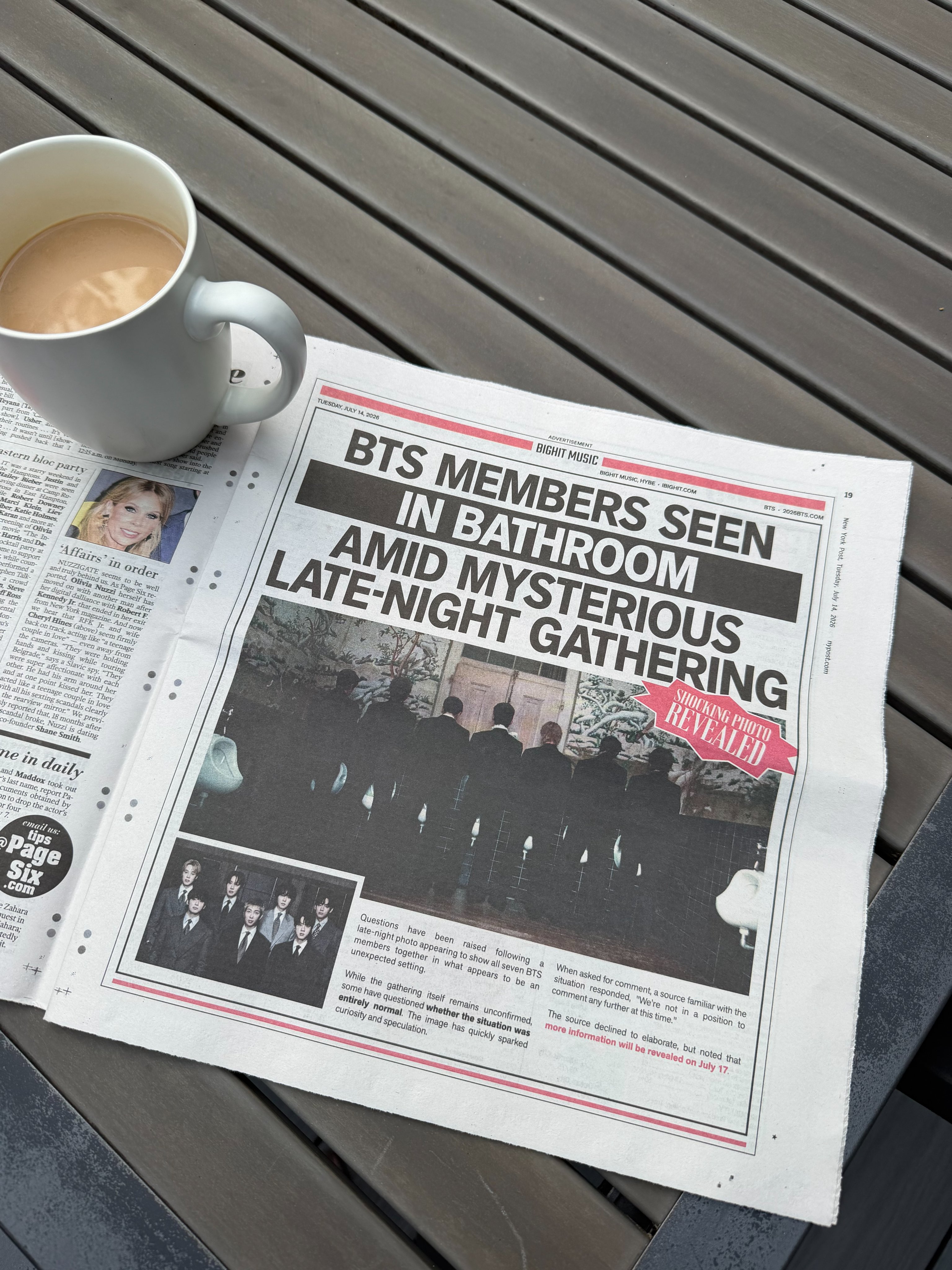
Photo: BIGHIT MUSIC
The picture underneath showed seven men in dark suits, backs to the camera, at a row of urinals in a room papered floor to ceiling with hand-painted birds and branches. No song title. No release date. BigHit said nothing at all for three days.
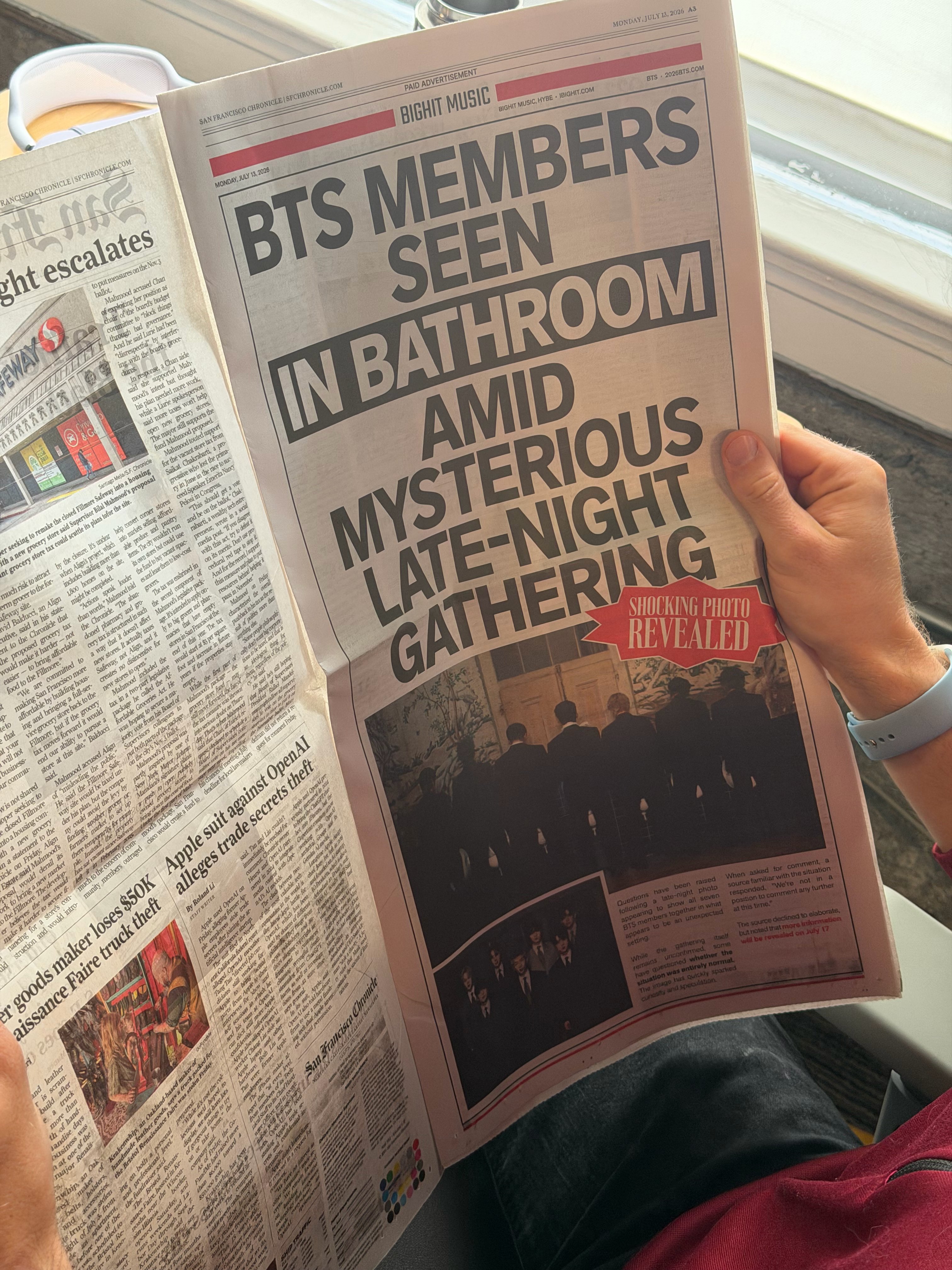
Photo: BIGHIT MUSIC
The scene belonged to a music video
'NORMAL' arrived on July 17 at 1 p.m. KST, and for its first 48 hours the video played in exactly one place: Spotify, for Premium subscribers only. No YouTube premiere, no countdown clock, no public view counter for fans to refresh. The song is the second single from ARIRANG, the group's fifth studio album, and it had already been on the Billboard Hot 100 since spring, entering at No. 41 on the chart dated April 4.
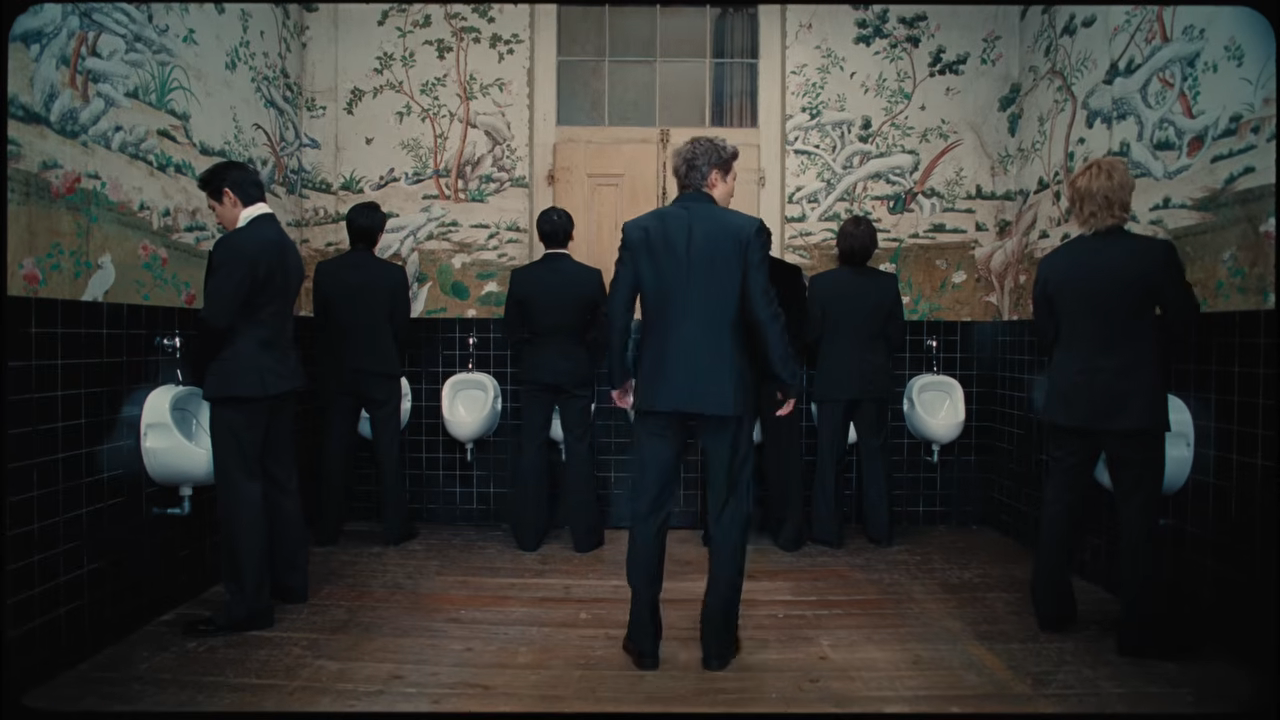
Photo: BIGHIT MUSIC
Ukrainian director Tanu Muino shot it. Her BTS is wintry and unhurried, the seven of them moving through an old mansion in scenes that read closer to a home video than a comeback film. Dogs wander in. A swan turns up. And then there is the bathroom, the one frame the newspaper ads had already put in front of several million Americans who had no idea what they were looking at.
Three audio versions landed the same day: the original, an instrumental, and a Korean-language rendition the group had first performed live in Busan.
▶ Official channel:
What happened next
Spotify confirmed on July 18 that 'NORMAL' had become the most-streamed K-pop music video in a single day in the platform's history. The company published no number, which is its habit. ARIRANG already held the platform's most-streamed K-pop album record, set on March 20. Lead single 'SWIM' went to No. 1 on the Hot 100 in April and has held the chart for months since, while ARIRANG entered the Billboard 200 at No. 1 — a seventh chart-topper on each list for the group. By the last week of July the song was being worked to US pop radio.
The read: an anti-comeback, carefully built
Two decisions in this rollout deserve to be pulled apart, because both cut against fifteen years of K-pop practice.
The first is the paywall. A music video premiere has been a YouTube ritual since the industry learned to count: the countdown, the simultaneous global press play, the 24-hour view record written up as news the next morning. Putting the video behind Spotify Premium threw all of that out. There was no public figure for fandoms to rally around, no leaderboard to defend, no screenshot to post. HYBE traded a metric it has spent a decade winning for something quieter — leverage with the platform that actually pays out, and a reason for a casual listener to keep a subscription running. That is the trade a company makes when it no longer needs the scoreboard to prove the point.
The second is the newspapers. Print ads in the Post and the Chronicle do not reach ARMY; ARMY was already looking. They reach a commuter with a coffee who has never gone searching for a Korean pop record, and they reach that person in the visual grammar of a supermarket tabloid, which is close to the only ad format a general audience reads for pleasure instead of skipping. Fifteen years ago a Korean agency would have bought a Times Square billboard and photographed it for the domestic press. This is a different instinct: plant the joke inside American media culture and let it be found, rather than announce an arrival from outside it.
And the joke carries weight. A group that spent its early career shooting in stadiums and deserts chose to be photographed from behind, in a restroom, doing the least photogenic thing a person does in public. The title is the argument. Musically the track is heavy and mid-tempo, an alternative-pop record built on a blunt drum kick and a snare that lands late, and the video declines to sell it with spectacle. The absence of one is the pitch.
Whether the model holds is a fair question. Exclusivity buys attention once. What it costs is the shared moment — millions of people watching the same frame at the same minute, which is most of what made a K-pop comeback feel like an event to begin with. The Spotify record suggests the audience followed this time. Whether a group without BTS on the marquee could pull the same audience through a paywall is the part nobody has tested yet.
Source: SINGLES Korea, Billboard, The Korea Herald, Spotify Newsroom
Comments 0